General Help
Click a tab and open the topic you need. Always follow your physician's prescription and feeding plan — these are general references, not medical advice.
Setting up the Kangaroo Joey pump
- Wash your hands thoroughly. Gather your feeding bag, correct formula, and the pump set tubing as prescribed.
- Fill the feeding bag with the prescribed amount of formula. Label with the date and time.
- Prime the tubing by allowing a small amount of formula to fill the line until it drips from the tip — this removes air from the tubing.
- Load the tubing into the pump cassette according to the arrows or color-coded guides on the pump door. Close and latch the pump door.
- Connect the tubing to your feeding tube or button, then enter your prescribed rate (mL/hour) and volume on the pump keypad and press Start.
- Flush your feeding tube with the prescribed amount of water before and after each feeding and after any medications.
Always follow your physician's prescription and contact our team at (718) 854-5501 if you have questions.
Confirming tube placement before a feed
Always confirm tube placement per your nurse's instructions before every feeding. Common methods include:
- pH testing: Aspirate a small amount of stomach contents with a syringe; a pH of 1–5 indicates gastric placement.
- X-ray verification: Required for initial placement and whenever placement is uncertain.
- Never use the air-injection/auscultation method as the sole confirmation technique — it is not reliable enough to be used alone.
- If you cannot confirm placement or if there is resistance when flushing, do not start the feeding — call your care team.
Flushing the feeding tube
- Use a 60 mL syringe filled with the amount of water prescribed by your care team (typically 30–60 mL at each flush).
- Flush before and after each feeding, before and after each medication, and every 4–8 hours if the tube is not actively in use.
- Use room-temperature sterile or distilled water — not tap water — unless your care team specifies otherwise.
- If the tube feels clogged (resistance when flushing), try gently pushing and pulling the plunger in a back-and-forth motion with warm water. Do not force the flush — call your care team if the tube remains blocked.
How often should feeding pump tubing be changed?
- Feeding bags and pump set tubing: Change every 24 hours for standard formula. If your formula contains additives (medications, fiber), change the bag every 4–8 hours or per your care team's instructions.
- Extension tubing (the short piece connecting to the feeding tube or button): Change every 24 hours or per your nurse's instructions.
- Never reuse disposable tubing sets — rinsing them does not adequately remove protein buildup, which harbors bacteria.
- Flush all tubing with the prescribed amount of water at each feeding, after medications, and before bag changes to prevent clogging.
- Call our team at (718) 854-5501 to arrange timely supply deliveries so you never run short.
Cleaning the pump exterior
- Wipe the outside of the pump with a damp cloth or disinfectant wipe daily — especially the keypad, door, and pole clamp.
- Do not immerse the pump in water or spray liquids directly onto the screen or keypad openings.
- If formula spills inside the cassette slot, open the door and wipe thoroughly — dried formula can jam the cassette mechanism.
- Check the pole clamp and IV pole attachment monthly for looseness or wear.
Tube site (stoma) care routine
- Clean around the tube insertion site daily with warm water and mild soap using a soft cloth or gauze. Pat dry gently — do not rub.
- Check the site daily for signs of infection: increasing redness, swelling, warmth, unusual discharge, or pain.
- Keep the external portion of the tube secured to the skin with a tube holder or tape to prevent accidental dislodgement.
- Report any skin changes or site irritation to your care team at the next visit.
My feeding pump is alarming. What do the common alarms mean?
- Occlusion/blockage alarm: The tube is kinked or clogged. Check for kinks in the tubing or extension set. Flush with warm water per your nurse's instructions. If flushing does not clear the blockage, call your care team.
- Empty bag alarm: The formula bag is empty. Clamp the tubing, replace or refill the bag, prime if needed, and restart.
- Low battery alarm: Plug the pump into the wall outlet to charge.
- Door open alarm: The pump cassette door is not fully latched — press it closed until you hear a click.
- If an alarm persists or you are unsure of the cause, pause the feeding (clamp the tube), and call our team at (718) 854-5501 before restarting.
The tube is clogged and won't flush. What should I do?
- Stop the feeding. Do not apply excessive force to the syringe plunger — this can cause the tube to rupture or dislodge.
- Try gently flushing with warm water using a back-and-forth push-pull motion on the plunger — this can help dissolve a soft clog.
- If the tube remains blocked after 2–3 gentle attempts, call your care team. Do not attempt to unclog with carbonated beverages — these are not clinically supported.
- To prevent future clogs: flush thoroughly before and after every feeding and every medication, and use crushed medications dissolved in water (never put whole pills down the tube without care team guidance).
The feeding tube appears to have come out or moved. What should I do?
If the tube is accidentally pulled out, this is a medical emergency:
- Cover the stoma site with a clean, dry cloth immediately.
- Go to the emergency room as quickly as possible — stoma sites can begin closing within hours and may require re-insertion under medical supervision.
- Do not attempt to reinsert the tube at home unless your care team has specifically trained you and authorized this.
- Call our team at (718) 854-5501 to notify us so we can coordinate a replacement and follow-up.
Tube site safety and infection prevention
- Clean around the tube insertion site (stoma) daily as described in the Maintenance tab.
- Check the site daily for signs of infection: increasing redness, swelling, warmth, pus or unusual discharge, or pain at the site. Report any of these to your care team immediately.
- Keep the external portion of the tube secured to the skin with a tube holder or tape to prevent accidental dislodgement.
- Never use the tube if you are unsure it is correctly positioned. Confirm placement per your nurse's instructions before every feeding.
Preventing aspiration during tube feeding
- Keep the head of the bed elevated 30–45 degrees during feeding and for at least 30–60 minutes after the feeding is complete — this significantly reduces the risk of aspiration.
- Check the residual volume (if instructed by your care team) before starting an intermittent feeding — high residual may indicate delayed gastric emptying.
- Never administer a feeding if the patient is lying flat or has significant vomiting.
- If the patient develops coughing, choking, or difficulty breathing during a feeding, stop the feed immediately and call your care team or 911.
When to call 911
Call 911 immediately if:
- The tube has come out and you cannot reach the care team quickly — stoma closure requires urgent ER care.
- The patient is coughing, choking, or showing signs of aspiration (formula in airway) such as respiratory distress or blue lips.
- The patient is unresponsive or has a sudden change in mental status during or after a feeding.
- There are signs of a severe infection at the tube site (spreading redness, fever, foul discharge).
After calling 911, contact our team at (718) 854-5501 so we can assist with equipment coordination.
Our Equipment
Enteral feeding equipment we deliver, set up, and support.
Feeding Pumps & Accessories
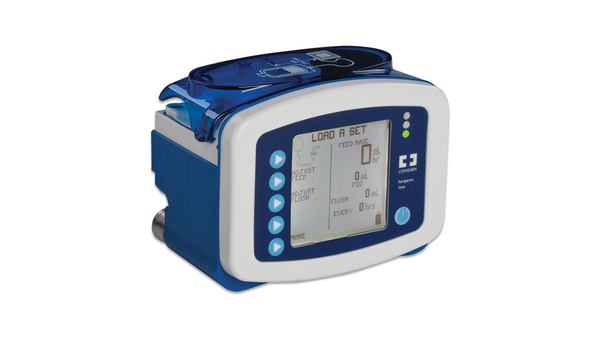
Kangaroo Joey Enteral Feeding Pump
Kangaroo Joey Enteral Feeding Pump
MedtronicCompact pump for continuous, intermittent, or bolus feeding.
Medline Enteral Feeding Pump Double
Medline Enteral Feeding Pump Double
#ENT199255LMedline dual-channel enteral feeding pump for home nutrition.
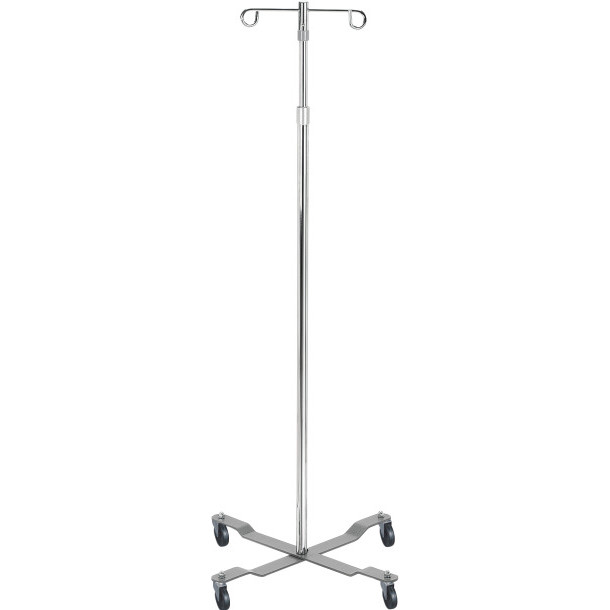
IV Pole (4-Hook, 5-Leg)
IV Pole (4-Hook, 5-Leg)
#13029Heavy-duty IV pole with 4 hooks and a stable 5-leg base — supports feeding bags and pumps.
Enteral Formula Brands We Carry
We supply enteral nutrition formulas from leading manufacturers — prescribed formulas are ordered and delivered directly to your home.

Glucerna, Jevity, Nepro, Osmolite, Suplena, TwoCal HN, Vital

Diabetisource AC, Nutren, Peptamen, Vivonex
Don't see your prescribed formula? Call us at (718) 854-5501 — we can source most insurance-covered enteral formulas.
Feeding bags, pump sets, G-tubes, irrigation syringes, formulas (Glucerna, Jevity, Peptamen & more) — view the full list in our Supplies Catalog.