Bathroom Safety

Shower chairs, raised toilet seats, and commodes — equipment for safe, comfortable bathing and toileting at home.

General Help

Click a tab and open the topic you need. Always follow your physician's instructions — these are general references, not medical advice.

Commode — over the toilet
  1. Lift the toilet seat and lid.
  2. Remove the pail and lid from the commode.
  3. Adjust the commode legs (press the leg buttons and slide up or down until all legs are even) so the commode fits just over the toilet.
  4. Place the commode over the open toilet. It's ready to use.
Commode — at the bedside
  1. Adjust the commode legs so all legs are at the same height.
  2. Place the pail onto the pail supports directly below the seat.
  3. Position the commode beside the bed within easy reach.
Commode — opening (between rooms)

Place the commode against a wall or other secure object and it's ready for use. When finished using, place the lid over the pail to contain odors and prevent spills.

Commode — in the shower
  1. Adjust the commode legs so all legs are at the same height.
  2. Remove the pail and lid from the commode.
  3. Confirm the legs are even and the commode does not wobble.
  4. When finished showering, towel-dry the commode.

These instructions are guidelines only — use only as directed by your healthcare provider.

Shower chair & raised toilet seat
  • Check that legs are locked at equal heights before each use.
  • Wipe down with mild soap and water after each shower; towel-dry to prevent rust.
  • For raised toilet seats with arms, make sure the seat is fully clipped to the toilet bowl before sitting.
How do I clean my shower chair?
  1. After each use, rinse the chair with clean water to remove soap residue, which can make the seat slippery over time.
  2. At least once a week, scrub all surfaces (seat, frame, legs, rubber tips) with warm soapy water and a soft brush.
  3. Inspect the rubber tip caps on each leg — replace them if cracked or missing, as worn tips can slip on wet tile.
  4. Check the seat for cracks monthly. A cracked seat can pinch skin and break unexpectedly under weight — replace it immediately.
  5. Rinse and air-dry after cleaning to prevent mildew on the frame joints.
How do I sanitize a bedside commode?
  1. Wear disposable gloves each time you empty and clean the commode.
  2. Empty the bucket after every use. Rinse with cold water first, then wash with warm soapy water.
  3. Disinfect the bucket daily using a solution of 1 tablespoon of household bleach per gallon of water. Let it soak for at least 5 minutes, then rinse and dry.
  4. Wipe down the seat, armrests, and frame with a disinfectant wipe or cloth daily.
  5. Replace the commode bucket if it is cracked or permanently stained, as cracks harbor bacteria that cannot be fully sanitized.
How do I inspect and maintain my raised toilet seat?
  1. Clean the seat weekly with warm soapy water and rinse thoroughly.
  2. Confirm stability before each use by pressing down and sideways on the seat — there should be no movement.
  3. Check the locking brackets or knobs every 2–4 weeks and re-tighten if any looseness develops.
  4. Inspect the plastic seat surface for cracks. A cracked seat is unsafe — call our team at (718) 854-5501 for a replacement.
Before sitting on any bathroom equipment
  • Confirm all legs are locked at equal heights.
  • Test for wobble — press down on each side. If it rocks, re-adjust.
  • Make sure rubber tips are present and not worn smooth.
  • Place a non-slip mat on the shower or tub floor if you don't have one.
Bathroom-environment safety
  • Install grab bars within reach of the toilet and shower — do not rely on towel bars (they're not load-bearing).
  • Keep the floor dry — wipe up splashes immediately.
  • Good lighting matters. Use a night-light for late-night trips.
  • Wear footwear with non-slip soles, or use non-slip socks.
When to call us

Call Dome at (718) 854-5501 if a leg, brake, or armrest feels loose; if rubber tips are worn; or if the patient's needs have changed (weight increase, new mobility limitation, etc.).

Our Equipment

Bathroom safety products we deliver.

Bathroom Safety
Equipment

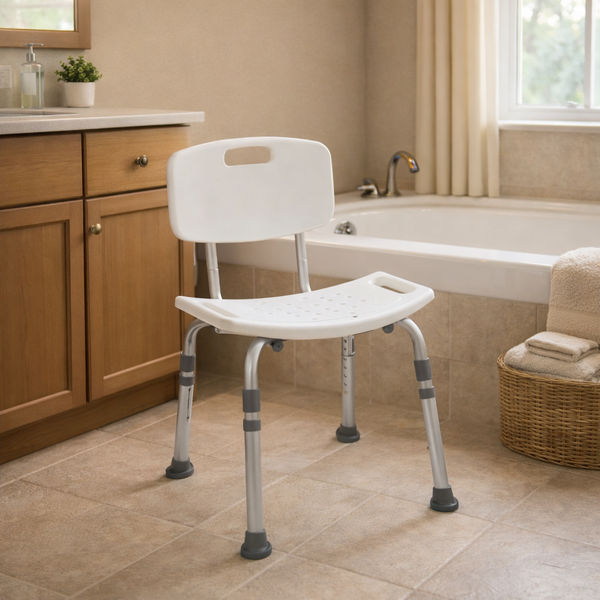
Drive Shower Chair with Back

Drive Shower Chair with Back

#12202KD-4

Sturdy shower chair with back support and drainage holes.
Equipment

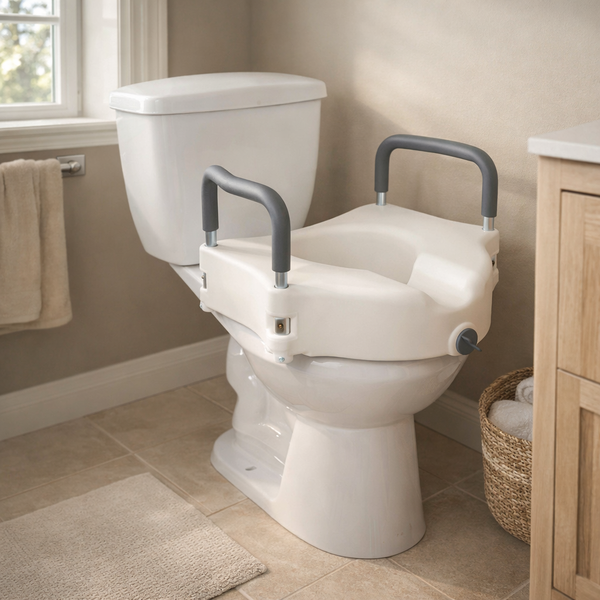
Raised Toilet Seat with Arms

Raised Toilet Seat with Arms

#12027RA-4BULK

Locking raised toilet seat with padded arms.
Equipment

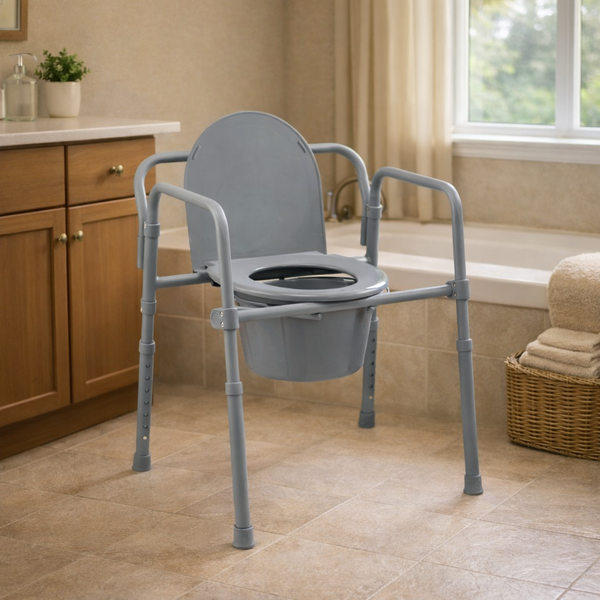
Drive Folding Commode

Drive Folding Commode

#11148CE-4

3-in-1 folding commode: bedside, over-toilet, or raised toilet seat.
Equipment

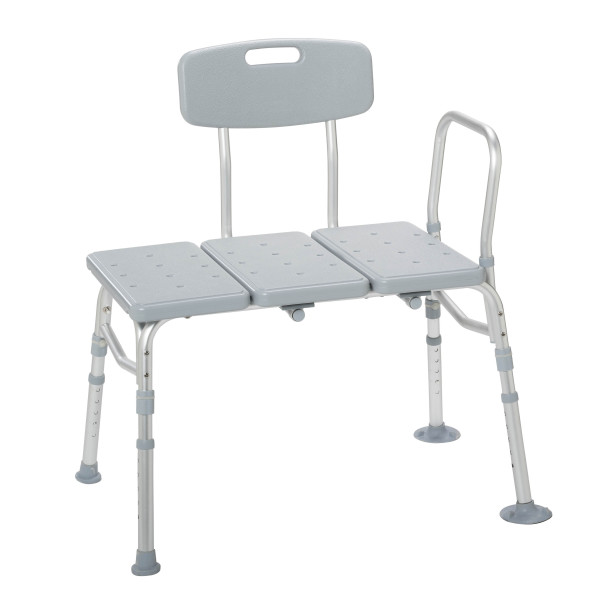
Drive Transfer Bench

Drive Transfer Bench

#12011KD-1

Transfer bench for safe, assisted transfers in and out of the bathtub — adjustable legs, back support, and non-slip feet.

Drive Shower Chair with Back — Help & FAQ

How do I use this device?
Place the shower chair on a flat, level shower floor. Adjust the leg height so the patient's knees bend at roughly 90° with feet comfortably flat on the floor — all four legs should be the same length and the chair should not rock. Before the patient sits, confirm the chair is stable. The back support helps patients who need trunk support during bathing. Use a handheld shower head if available to direct water while seated. Never place the chair on a wet, slippery mat without non-slip feet in good condition.
How do I clean it?
Rinse the chair with warm water after each use to remove soap residue. Weekly, wash the seat, back, and frame with a mild disinfectant spray or diluted bleach solution, scrubbing any grooves or joints where mildew can accumulate. Rinse thoroughly and allow to air dry. Inspect rubber tips on the legs regularly — replace them if worn, as worn tips significantly reduce slip resistance.
What if it feels unstable?
Check that all four legs are adjusted to the same height and that locking pins are fully engaged. Confirm rubber leg tips are present and not worn. Never use the chair if it rocks or slides. If any part appears bent or damaged, stop use and call our team at (718) 854-5501 for a replacement.

Raised Toilet Seat with Arms — Help & FAQ

How do I install this?
Lift the existing toilet seat lid and set it aside if needed. Place the raised seat directly onto the toilet bowl rim — most models have a locking bracket underneath that tightens by turning a knob or lever to secure the seat to the bowl. Confirm the seat does not rock or shift before use. The padded arms provide support for lowering and rising, reducing strain on the knees and hips. Adjust arm height if the model allows, so the patient can push down comfortably from a standing position.
How do I clean it?
Wipe the seat surface and arms with a disinfectant spray or wipe after each use. Weekly, remove the raised seat from the bowl and clean all surfaces and the locking bracket thoroughly with a mild disinfectant, then rinse and allow to dry before reinstalling. Check the locking bracket for buildup that can reduce its grip.
What if it feels loose?
Tighten the locking bracket under the seat — most models have a knob or lever that should be snugged firmly against the underside of the toilet bowl rim. If the seat continues to shift or rock after tightening, the bracket may not be compatible with the toilet bowl shape. Call our team at (718) 854-5501 for assistance finding a compatible option.

Drive Transfer Bench — Help & FAQ

How do I assemble and set up the transfer bench?
  1. Remove all components from the box and inspect each piece for damage before assembly.
  2. Lay the bench upside down on a flat surface. Note that the legs and their receptacles are labeled "A" or "B" — match them accordingly.
  3. Depress the brass push pin on each leg and insert it into the matching receptacle until the pin clicks fully through the hole.
  4. Attach the backrest by depressing the brass push pins and sliding the support tubes through both receptacles until they lock.
  5. Attach the armrest per the included instructions.
  6. Turn the bench right-side up. Place the two legs with suction cups inside the tub and the two legs with rubber tips on the floor outside the tub.
  7. Before each use, adjust the height of all four legs to the same level so the bench sits level across the tub wall — verify each height-adjustment button protrudes fully through its hole.

Weight capacity: 400 lbs (181 kg). Do not exceed this limit.

How do I safely transfer in and out of the tub?
  1. Position the bench so the outside legs are on the bathroom floor and the inside legs (with suction cups) rest on the tub floor. Confirm the bench does not rock.
  2. Sit on the outside portion of the bench first, then swing your legs one at a time over the tub wall — use the armrest for support throughout.
  3. Slide to the inside seat position before bathing.
  4. To exit, reverse the process: slide to the outside seat, swing legs over the tub wall, then stand using the armrest.
  5. Always have a caregiver assist until you are fully confident with the transfer. A handheld showerhead makes bathing while seated much easier.
How do I clean and maintain it?
  • Clean the bench with mild soap and warm water after each use. Rinse thoroughly and wipe dry — leaving the bench wet can cause slipping and mildew buildup under the suction cups.
  • Before each use, inspect the rubber tips on the outside legs and the suction cups on the inside legs. Replace them if worn, cracked, or no longer gripping.
  • Check that all height-adjustment buttons are fully locked and the bench does not wobble before each transfer.
  • Do not use abrasive cleaners or bleach solutions — they can damage the plastic and weaken the suction cups over time.
What if the bench feels unstable?
Do not use the bench if it rocks or any leg feels loose. Verify all four legs are set to the same height and that all push-pin buttons are fully engaged. Confirm the suction-cup legs are pressing firmly on the tub floor. If instability continues or a component appears bent or cracked, stop use and call our team at (718) 854-5501 for a replacement.

Drive Folding Commode — Help & FAQ

How do I use this device?
Unfold the commode fully until the frame locks open — never use it in a partially folded position. Place the collection bucket under the seat. Set the commode on a flat, level surface and adjust leg height so the patient's knees bend at roughly 90° with feet flat on the floor. All four legs must be the same length and the commode must not rock before the patient sits. The folding design allows for easy storage and transport when not in use. The commode can also be positioned over a standard toilet as a raised seat with arms, or used as a bedside commode when bathroom access is difficult.
How do I clean it?
Remove and empty the collection bucket after each use; wash it with hot, soapy water, disinfect, and rinse thoroughly before replacing. Wipe the seat, lid, arms, and frame with a damp cloth and disinfectant cleaner at least once a week — more frequently if soiled. Wipe dry before use. Inspect rubber leg tips regularly and replace them when worn to maintain slip resistance.
What if it feels unstable?
Confirm the commode is fully unfolded and that all locking mechanisms are engaged. Check that all four legs are set to the same height and that rubber tips are intact. If the frame continues to rock or any component appears bent or cracked, stop use immediately and call our team at (718) 854-5501 for a replacement.
Also need mobility aids?

Bathroom safety equipment is often paired with walkers, rollators, wheelchairs, and canes — view our full mobility lineup.

View Mobility Aids

Need Help?

For a medical emergency please dial 911.
For equipment questions our team is here Mon–Fri 9 AM – 5 PM.

Contact Our Team   (718) 854-5501